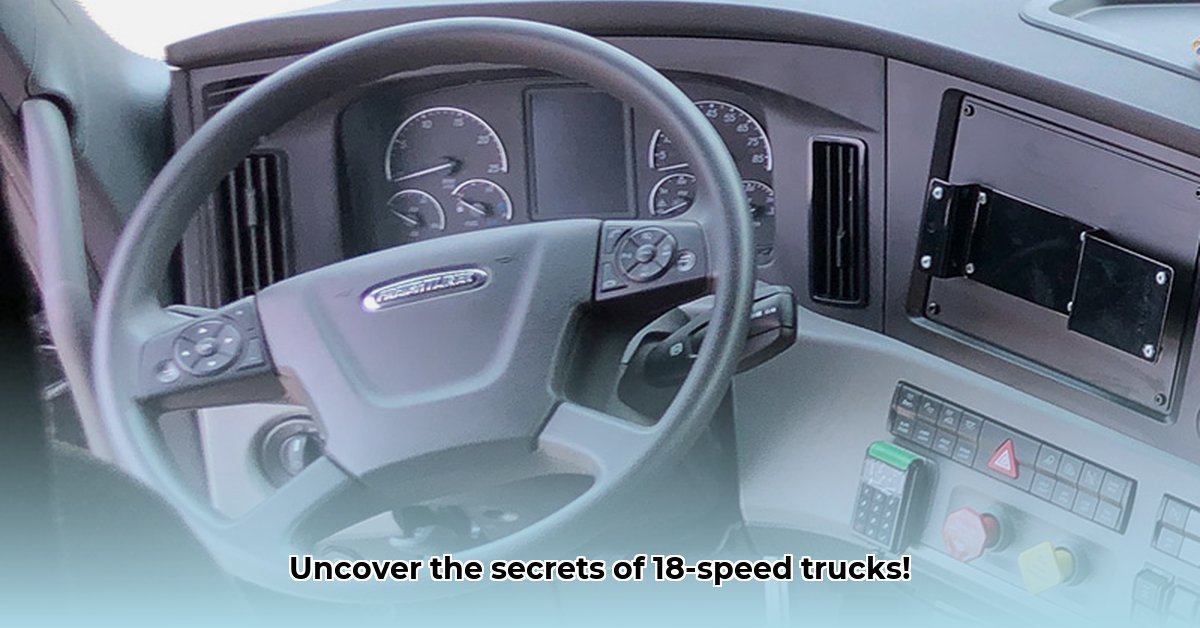
Ever wondered about the intricate mechanics behind those massive semi-trucks rumbling down the highway? For decades, the 18-speed manual transmission has reigned supreme, its distinctive sounds a testament to power and driver expertise. However, the landscape is shifting with the emergence of Automated Manual Transmissions (AMTs). This comprehensive guide delves into the heart of the 18-speed, explaining its operation, optimal shifting techniques, crucial maintenance, and a comparison to its modern counterpart, the AMT. Whether you're a seasoned trucker or simply curious about this impressive piece of engineering, this guide provides the knowledge you need to navigate the world of 18-speed transmissions. For more on bobtailing, check out this helpful resource: Bobtailing Information.
Anatomy of an 18-Speed Transmission
The 18-speed transmission isn't just a collection of gears; it's a meticulously engineered system designed to translate engine power into smooth, efficient wheel motion, especially critical when hauling heavy loads. This system comprises an intricate network of gears, shafts, synchronizers, and other components working in perfect harmony to provide a wide range of gear ratios. These ratios are essential for maximizing both performance and fuel efficiency, allowing drivers to finely adjust engine speed to wheel speed. Think of it as having a low gear for conquering steep inclines and a high gear for cruising on flat stretches.
The iconic "H" pattern on the gear stick serves as a roadmap for the driver, guiding them through the numerous gear selections. Beyond forward motion, the transmission includes three reverse gears—absolutely critical for maneuvering in tight spaces or starting on inclines with hefty loads. Mastering this pattern is a hallmark of an experienced driver's skill, honed over thousands of miles and countless shifts. Isn't it fascinating how such a complex system can be controlled with such precision? This precision is a testament to years of experience and road-tested skill.
Shifting Techniques: The Art of the Road
Operating an 18-speed transmission is more than just moving a lever; it's a delicate dance between clutch control, engine RPM (revolutions per minute), and an intuitive feel for the road. Here’s a breakdown of the process:
- Depress the Clutch: Fully depress the clutch pedal to disengage the engine from the transmission, enabling gear changes without grinding.
- Select the Gear: Use the "H" pattern on the shifter to carefully choose the next gear. This requires practice and a keen understanding of the road conditions.
- Smooth Clutch Release: Gradually release the clutch pedal while simultaneously increasing the throttle, carefully matching the engine's speed (RPM) to the transmission's speed. This prevents jarring and gear grinding.
- RPM Matching: Experienced drivers intuitively match RPMs, but a tachometer helps beginners ensure optimal gear selection for fuel efficiency and engine health. This skill takes time and dedicated practice to perfect.
The "Floating Gears" Technique: This advanced technique involves shifting between gears without fully depressing the clutch. While some claim it increases speed and efficiency, it's a high-risk maneuver demanding exceptional skill and potentially leading to premature transmission wear. Master the basics first; this technique should only be attempted by highly experienced drivers.
Maintenance and Troubleshooting: Prolonging Transmission Life
Regular maintenance is paramount to the longevity of your 18-speed transmission. This includes:
- Fluid Checks: Regularly check the transmission fluid level. Low levels can cause damage.
- Lubrication: Ensure proper lubrication of key components.
- Seal Inspections: Carefully inspect seals for leaks or wear. Early detection prevents costly repairs.
Addressing issues proactively—such as unusual noises during shifting or difficulty changing gears—can prevent catastrophic failures down the road. Neglecting maintenance can result in costly repairs or complete transmission failure, leading to significant downtime. The cost of preventative maintenance is far less than the expense of a major repair.
18-Speeds vs. Automated Manual Transmissions (AMTs): A Technological Comparison
The trucking industry is experiencing a rise in Automated Manual Transmissions (AMTs). These systems offer a smoother, less physically demanding driving experience, thereby reducing driver fatigue. However, the debate remains about whether AMTs offer the same level of control and fuel efficiency as a skillfully driven 18-speed, especially under challenging conditions.
| Feature | 18-Speed Manual | Automated Manual Transmission (AMT) |
|---|---|---|
| Driver Skill | High | Low |
| Fuel Efficiency | Potentially higher (skilled driver) | Generally high |
| Maintenance | More complex | Less complex |
| Initial Cost | Lower | Higher |
| Control | Precise, driver-controlled | Less precise, computer-controlled |
The best choice depends on individual driver preferences, company policies, and operational needs.
The Future of 18-Speed Transmissions
While AMTs continue to improve, the precision and potential fuel efficiency of a skillfully driven 18-speed manual likely ensures its continued relevance. The future likely involves a blend of both technologies, catering to diverse needs and preferences.
Key Takeaways:
- Mastering an 18-speed transmission requires dedicated practice and skill.
- Clutch control and RPM matching are fundamental to smooth shifting.
- The "floating gears" technique is an advanced maneuver and carries significant risk.
- Regular maintenance is essential for extending transmission life.
- AMTs offer advantages in convenience and reduced driver fatigue, but the debate continues about their long-term cost-effectiveness and fuel efficiency compared to expertly driven manual transmissions.